
Short answer
In most rentals, the landlord is responsible for garage door repairs caused by normal wear, age, or mechanical failure — things like a broken spring, a dying opener, or a cable that finally snapped after years of use. The tenant is usually responsible for damage they caused — backing the car into the door, forcing it closed when something was jammed, or ignoring a problem until it got worse. But none of that matters if the lease says something different. The lease wins the argument every time, so go read it before you argue about who's paying.
Why it's not always obvious
A garage door is part of the structure, like a roof or a water heater, so landlords generally have to keep it safe and functional. But the opener — the motor, the remotes, the keypad — sometimes gets treated more like an appliance in the lease, similar to a dishwasher or a window AC unit. Some leases make tenants responsible for keeping the opener in working order or replacing batteries and remotes, while the landlord still covers the door itself, the springs, and the track. That split is common enough that it's worth checking your specific lease language instead of assuming.
There's also a difference between "broke on its own" and "broke because of how it was used." A spring that snaps after years of cycles is wear and tear. A door that comes off its track because someone tried to force it past an obstruction is tenant-caused damage. Photos and a maintenance request paper trail matter a lot if this ever becomes a dispute.
What to inspect at move-in
Do this walkthrough before you sign anything or move a single box in. It takes fifteen minutes and saves you from inheriting someone else's problem.
- Open and close the door manually (disconnect the opener first) to feel for resistance, grinding, or uneven movement. It should glide, not fight you.
- Check the springs above the door. Look for visible gaps, rust, or a spring that looks stretched compared to its neighbor.
- Inspect the tracks for dents, rust, or gaps where the rollers sit. Road salt and winter moisture speed up corrosion on older tracks, so this matters more here than in a drier climate.
- Test the opener with the remote and any wall-mounted keypad. Listen for grinding, delayed response, or a door that reverses unexpectedly.
- Check the auto-reverse safety sensors by waving something in the door's path while it's closing. If it doesn't stop and reverse, that's a safety issue worth flagging immediately, not something to live with.
- Look at the weatherstripping along the bottom and sides. Cracked or missing seals let in cold air, mud, and meltwater — a bigger deal heading into a Michigan winter than it would be in spring.
- Note the cables for fraying, rust, or visible wear near the drum.
Write down what you find, date it, and send it to the landlord or property manager in writing — even a simple email with a few photos attached. That record is what protects you later if something fails and someone tries to claim it was pre-existing damage you caused.
Timing matters right now
If you're moving in during late fall, pay extra attention to how the door handles cold. Garage doors here deal with hard freezes, road salt tracked in on tires, and the slush and mud that come with plow season. A door that seemed fine during a daytime showing can behave differently once overnight temps drop — springs lose tension in the cold, openers slow down, and old weatherstripping stiffens and cracks. If anything felt borderline during your walkthrough, get it checked before the first deep freeze, not after.
When to call Clinton Township Garage Door
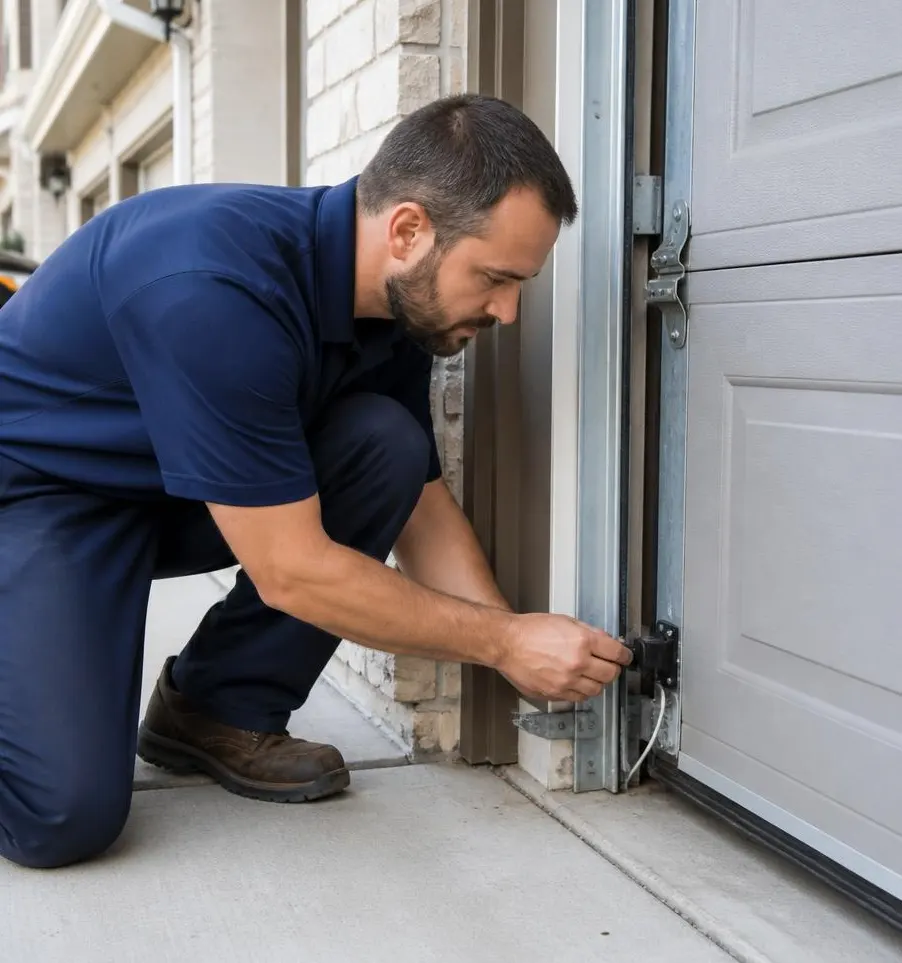
If you're a landlord trying to document a unit's condition before new tenants move in, or a tenant who found something concerning during a move-in walkthrough, it's worth getting a professional opinion rather than guessing who's liable. We can run a full inspection, test the springs, cables, and opener, and give you a clear written assessment of what's wear-and-tear versus what needs immediate attention — useful for both sides of a lease. Our Garage Door Maintenance service covers exactly this kind of once-over, and if something's already failing, our Cable & Track Repair and Spring Replacement teams can fix it fast so nobody's stuck arguing about responsibility while the door sits broken through a Michigan winter.
Serving Clinton Township, Mount Clemens, Sterling Heights, Macomb Township, Harrison Township, Fraser, Roseville, and Shelby Township — call Clinton Township Garage Door today to schedule a move-in inspection or repair before the cold really sets in.