
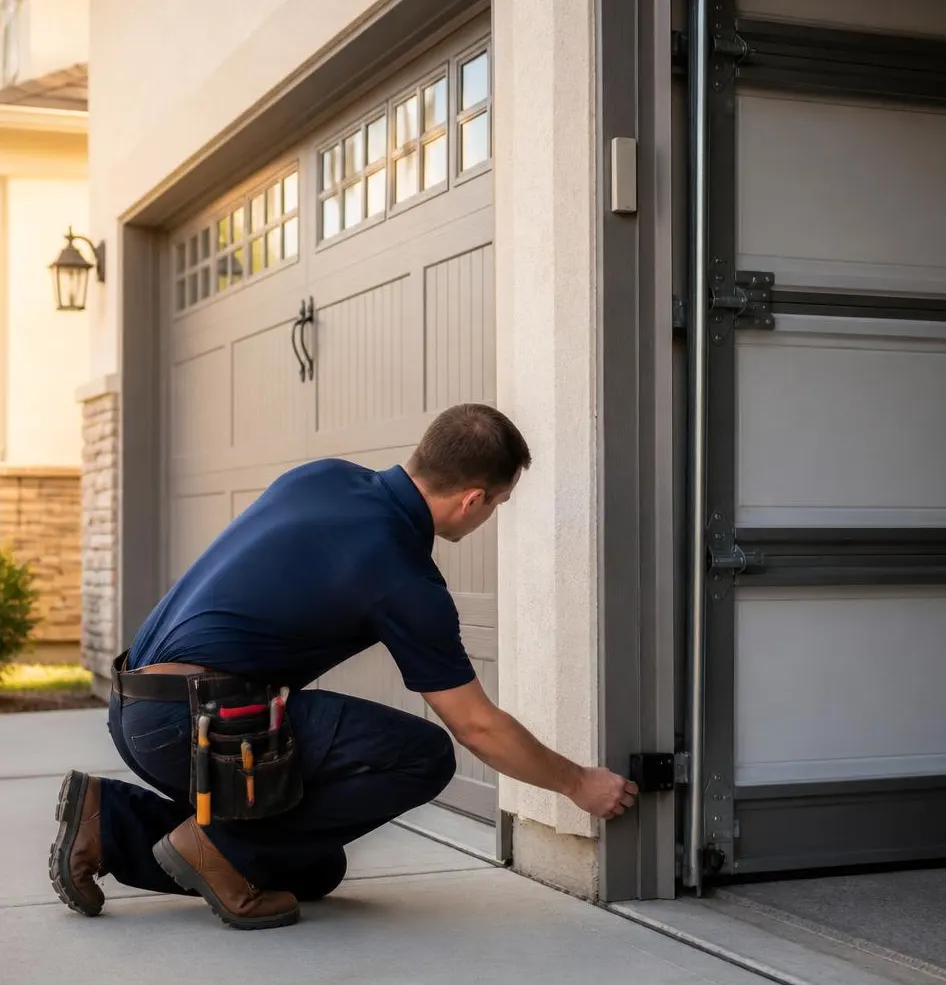
A typical October service call in this area starts the same way: a homeowner notices the garage door is suddenly slower, noisier, or jerking partway through its cycle. Nine times out of ten, nothing broke overnight — the door has just been running all year on worn weatherstripping, dry hinges, and springs that were already working harder than they should. Once overnight temperatures start dropping into the 30s and 40s, those small issues turn into stuck doors, frozen tracks, and springs that snap on the coldest morning of the year. Getting ahead of it now, before the first hard freeze, is a lot cheaper and less disruptive than dealing with a dead door in January.
Why Cold Weather Is Hard on a Garage Door
Metal contracts in the cold, and garage door springs are no exception. A torsion spring that's already fatigued from years of lifting a heavy door can lose tension faster once temperatures drop, and openers have to work harder to compensate. That extra strain is exactly why spring failures spike in winter — not because cold weather causes damage out of nowhere, but because it exposes parts that were already near the end of their life. If your door has felt heavier than usual when you lift it manually, or the opener strains and groans before the door moves, that's worth addressing before winter, not after a 2 a.m. breakdown.
Weatherstripping and Seals
Check the rubber seal along the bottom of the door and the weatherstripping around the frame. Over a Michigan summer, that rubber dries out and cracks from UV exposure and heat; by winter it's often brittle enough to let in wind, snow, and meltwater. A cracked bottom seal doesn't just let cold air into the garage — it lets in slush and road salt runoff that can pool under the door and accelerate rust on the track and bottom panel. Replacing the bottom seal is inexpensive and takes less than an hour, and it's one of the highest-value fixes you can make before winter.
Lubrication Before the Freeze, Not After
Hinges, rollers, and the torsion spring itself all need a fresh coat of garage-door-specific lubricant (not WD-40, which washes grease out rather than replacing it) before temperatures drop. Cold makes grease stiffen and old lubricant gum up, which forces the opener motor to work harder every single cycle. Doing this in October, while it's still easy to get outside and work on the door, means everything is moving freely before the first ice storm instead of freezing stiff overnight.
Track and Cable Inspection
Road salt tracked in on tires and boots, combined with slush dripping off the car, is rough on galvanized tracks and cables over a winter. Look for rust spots forming now, and check that the tracks are still properly aligned — a door that's slightly off-track will bind even worse once ice forms in the rollers. If you hear a grinding or popping sound as the door moves, don't wait; a misaligned track under winter stress is a common cause of cables jumping or fraying.
Opener and Battery Backup
Power outages from winter storms and ice-loaded power lines aren't rare here. If your opener doesn't have battery backup, consider adding one before the season — it's the difference between being able to get your car out during an outage and being stuck. Also test the manual release so you know it still works smoothly; cold-stiffened mechanisms can be surprisingly hard to operate when you actually need them.
The Simple Balance Test
Disconnect the opener, lift the door halfway by hand, and let go. A properly balanced door should stay roughly in place. If it drifts down or shoots up, the springs are out of balance and compensating poorly — which gets worse, not better, in cold weather. This isn't a DIY spring adjustment job; it's a signal to get it looked at.
When to Call Clinton Township Garage Door
If your balance test fails, the door is noticeably louder or heavier than it used to be, or you're seeing rust and cracked seals you can't fully replace yourself, it's time to call in a technician rather than wait for a breakdown in freezing weather. Clinton Township Garage Door handles full pre-winter inspections, Garage Door Maintenance tune-ups that cover lubrication, track alignment, and hardware checks, and Spring Replacement for doors already showing signs of fatigue. Catching a failing spring now means a scheduled repair on your timeline, not an emergency call during a snowstorm.
If your garage door feels off heading into this winter, don't wait for the first deep freeze to find out why. Call Clinton Township Garage Door today to get your door inspected and ready for whatever Macomb County winter brings.